It refers to deploying your money in any asset, with the primary aim being the generation of returns. There are various forms of investments, ranging from unit-linked investment plans to mutual funds and stocks. Yet, the main importance of investments lies in how you can grow your wealth and meet specific goals.
What Is Investment?
The definition of investment is putting your money into an asset with the goal of allowing your capital to grow. So, the investment meaning is basically deploying funds to generate future returns, which ultimately helps create wealth as per your desired objectives. You may invest in a saleable asset that may earn income via profits. At the same time, one of the other objectives of investment is earning returns or income through the accumulation of gains.
How Does an Investment Work?
Knowing how investment works is important before you take the plunge. When you invest, you get what is known as your return on investment. These may either be market-linked or guaranteed, depending on the investment type. With guaranteed returns, what you get is fixed from the start. You can call these fixed return investments.
However, for market-linked returns, you can invest in debt and equity markets with varying levels of risk. The longer you stay invested, the higher your returns are likely to be. Short-term investments (held for less than three years) may have comparatively lower risks and modest returns. Long-term investments (held for five years or more) usually have higher risks and chances of higher returns. A long-term investment provides the necessary time to ride out market volatility and compound your wealth. Some examples include ULIPs and equity mutual funds.
Types of Investments
There are several types of investments that you can consider for your portfolio. Let us take a closer look at some of the prevailing investment options in India.
- ULIPs (Unit-Linked Insurance Plans) - ULIPs are some of the most popular investments that offer life coverage and market-linked returns. They are some of the top investment options for NRIs, with lock-in periods of five years, flexibility to invest in equity, debt, or a combination of both funds, and tax deductions. You can consider specially tailored NRI investment plans like US Dollar Education Plans and other options like the Global Wealth Advantage Plan from HDFC Life International. These can offer USD-denominated investment options, substantial life coverage, and potential long-term returns, with access to globally diversified investments and potential tax advantages, subject to applicable laws and eligibility.
- Savings/Endowment Plans – If you’ve been thinking of the savings vs investing debate, this plan may bridge the gap. It is a life insurance plan that comes with fixed returns and life coverage. They are low-risk investments where you get returns in the form of regular income or as a lump sum amount.
- Legacy Public Provident Fund (PPF) Accounts – While traditionally a popular low-risk avenue, NRIs are strictly not allowed to open new PPF accounts. However, if they opened an account before changing their residency status, the existing account may generally be maintained subject to applicable rules and conditions.
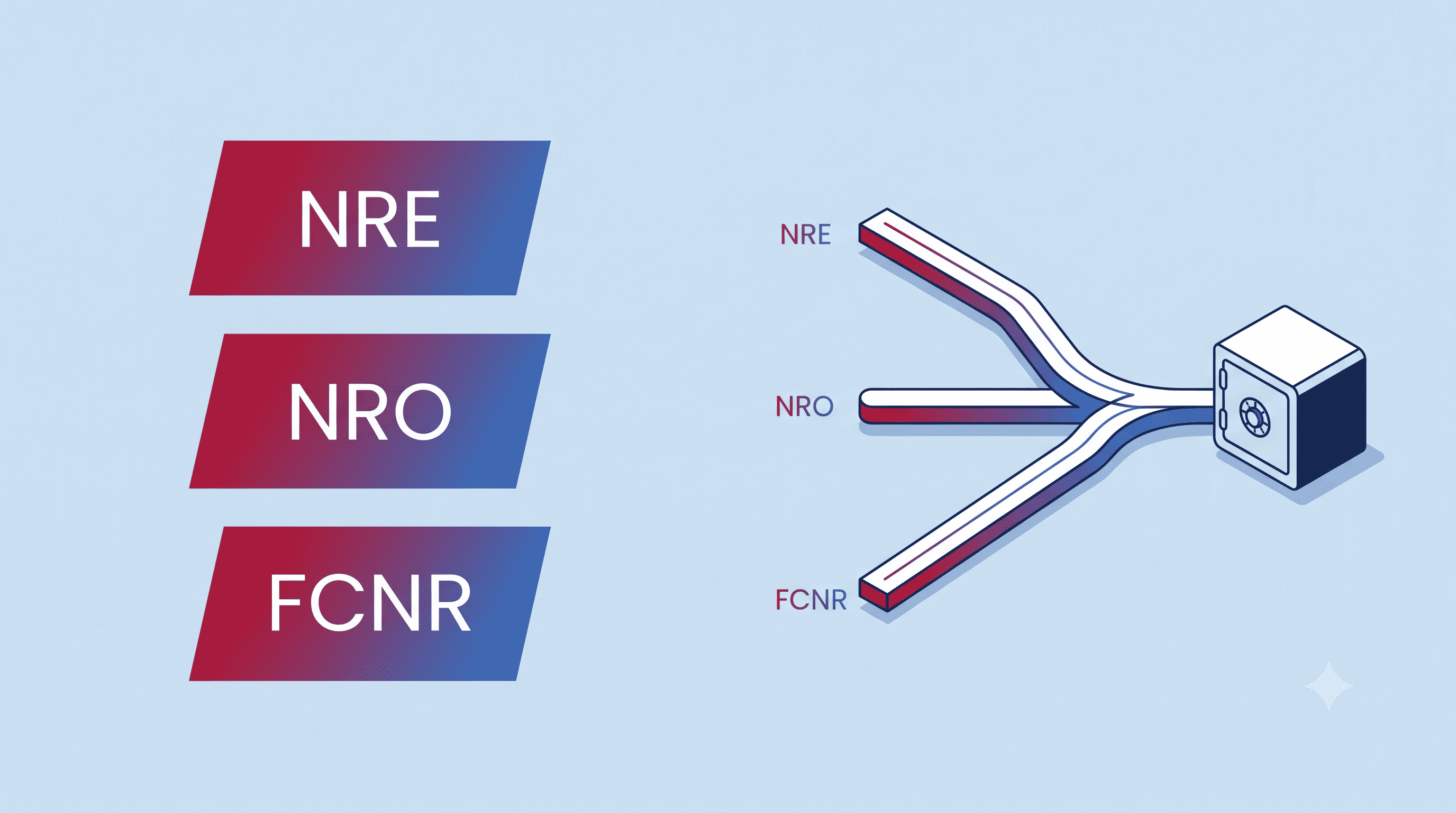
- Deposits - NRE deposits are mainly for parking foreign income and are tax-free in India. You can expect full and free repatriation of both principal and interest, while the tenures range between one and ten years. NRO deposits are used to manage income earned in India, such as rent, dividends and pension; the interest is taxable in India and can generally be repatriated after applicable taxes, subject to FEMA rules. Tenures vary by bank and deposit type
- Stocks – You may buy shares of listed entities, although it requires thorough knowledge of the market. These are high-risk investments since the returns are strictly market-linked and affected by volatility.
- Mutual Funds – These are market-linked instruments managed by professional fund managers. You may choose from multiple equity, debt, or hybrid funds, investing through periodic payments or lump sum amounts.
- Bonds – They are debt instruments issued by corporations, Governments, and municipalities. It is basically borrowing money from the public and returning it at maturity with regular interest payments in the interim.
- ETFs – Exchange-traded funds are baskets of securities pooling money from several investors. So, you can ensure diversification of investments and these instruments are traded on the stock exchange, unlike mutual funds.
Where and How to Invest?
Here’s what you should know:
- Choose your duration and budget- You can always choose from long-term vs short-term investments. Choose investments matching your timeframes and goals, while setting a clear budget.
- Risk appetite and returns- Understanding the investment risk and return carefully is always necessary. Invest based on your risk tolerance level.
- Do your homework- You must carefully research the specific investment options for NRI individuals because your residency status limits certain domestic avenues. Do your research extensively on the time horizons, returns, and other aspects.
- Understand the liquidity limits- Each investment has specific liquidity limits. Some may help you get money quickly, while others may have longer holding periods.
- Diversify your portfolio- It is always best to spread out your investments across high and low-risk avenues, along with multiple instruments. Not diversifying is one of the mistakes to avoid in expat investments.
- Look for the tax implications- You should always choose more tax-efficient investments for NRIs, since a higher tax outgo will only eat into your net returns.
- Take professional advice- Take professional guidance to help you make better decisions.
Factors to Consider Before Investing
Some of the key considerations include:
- Financial goals and horizon
- Desired risk levels
- Taxation
- Liquidity, diversification, and expected returns
- STCG (short-term capital gains) and LTCG (long-term capital gains). NRIs are subject to applicable TDS on taxable capital gains. For listed equity shares and equity-oriented mutual funds, STCG is taxed at 20%, while LTCG is taxed at 12.5% on gains exceeding Rs 1.25 lakh in a financial year, subject to applicable conditions.
- Reputation of the investment provider
Understanding Risk and Return in Investment Plans
It is essential to understand the concepts of investment risk and return. There are high, medium, and low-risk investments that you may consider for your portfolio. The core principle for investments is that riskier assets may offer potentially higher returns, while comparatively safer assets may come with lower returns. The types of risk include systematic risk, which are market-wide risks that you cannot eliminate such as changes in interest rates or inflation.
Unsystematic risks are industry or company-based risks that you may reduce by diversifying your portfolio. The types of returns include expected or anticipated returns, actual or realised returns, and required returns. Your risk appetite will determine the volatility you can take, impacting the overall asset allocation between low-risk debt and high-risk equity.
How HDFC Life International Helps
HDFC Life International helps NRIs hedge against future volatility, inflation, and currency fluctuations with robust returns in a stable global currency. You can choose from unique USD-denominated investment plans offered in GIFT City, Gujarat, with higher tax efficiency, flexible investment choices, and extensive life coverage. From creating wealth to paying for your children’s education and global life insurance coverage, HDFC Life International gives you all these benefits, while helping diversify your investment portfolio as well.