Insurance vs Mutual Fund for NRI Child Education: Which is the Better Investment?
If you’re an NRI looking to accumulate ample funds for your child’s education, there are several investment options you will naturally consider. Insurance and mutual funds are two of the most preferred avenues in this case. There is thus a need to demystify the insurance vs mutual fund child education NRI debate and help you work out the best solution that is tailored to your needs. Find some helpful pointers below to help you choose.
Understanding the Basics: Mutual Funds and Insurance for NRI Education Planning
When it comes to choosing the best insurance vs mutual fund for NRI child education, you should understand the basics of both these investment types first. Here are some key aspects to give you a better picture.
What is a Mutual Fund and How Does It Work for NRIs?
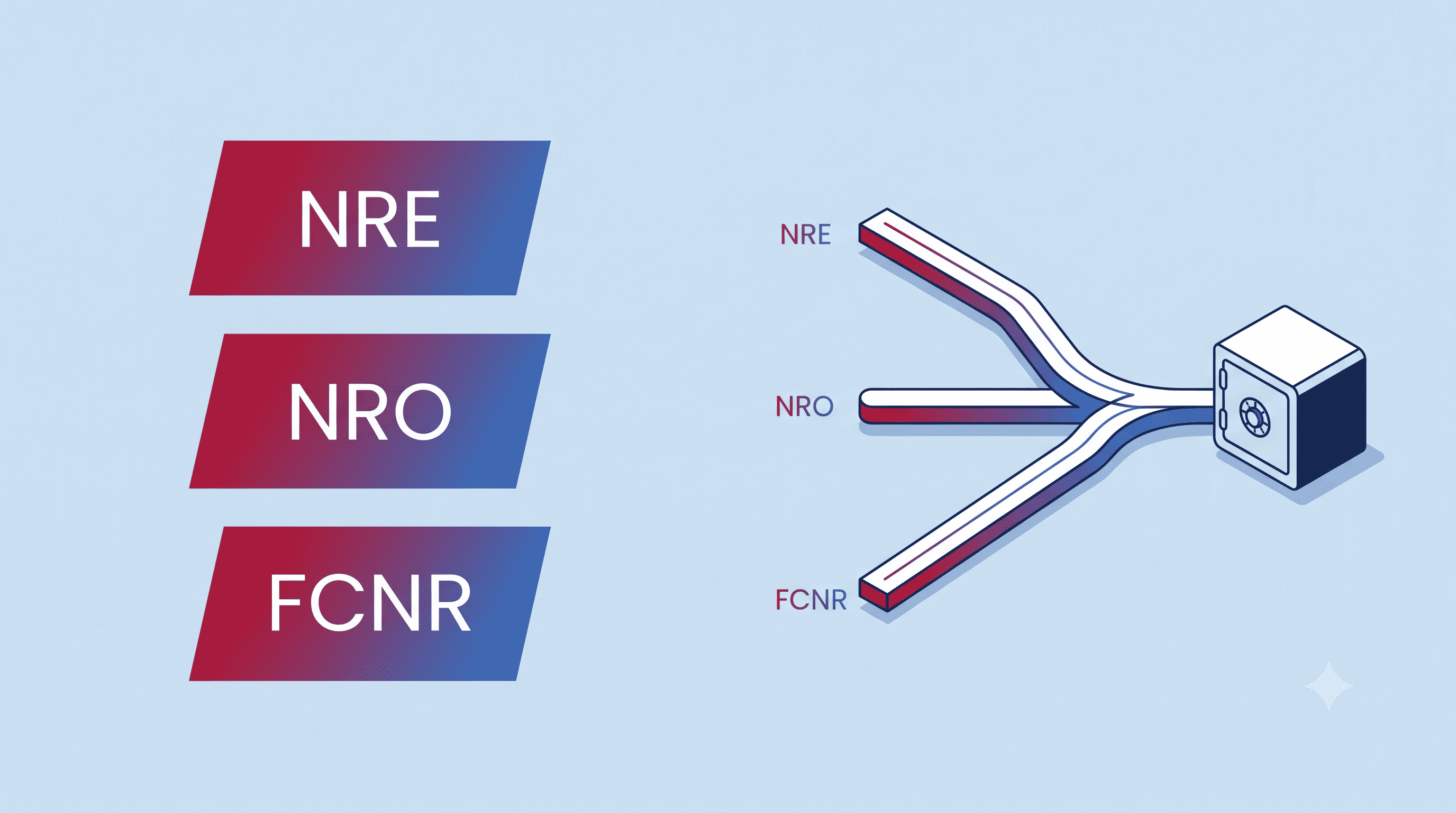
A mutual fund is a pool of money that you can invest in several types of securities, such as bonds, stocks and other assets. Whenever you invest in any mutual fund, you’re essentially purchasing a small part of this pool in the form of a specific number of units. NRIs usually have to open NRE/NRO accounts with Indian banks to enable mutual fund investments with AMCs. They also have to adhere to the FEMA guidelines. Equity Linked Savings Schemes (ELSS) are also available for NRIs, which qualify for Section 80C tax benefits.
How Do Child Insurance Plans Work for NRI Parents?
These plans combine the potential for wealth creation with financial protection, helping NRI parents build a corpus for their child’s future while ensuring their family remains financially protected against unforeseen events, even when they are no longer around. Unlike mutual funds, Investment-Linked Insurance Plans (ILIPs) also provide life insurance coverage alongside market-linked investment opportunities.
Some innovative ILIPs offer flexible investment structures that allow NRIs to switch between different investment strategies without having to sell their investments. This gives parents greater flexibility to respond to changing market conditions while continuing to work towards long-term goals such as their child’s education and future financial needs. USD-denominated ILIPs can further help NRI parents build wealth in US Dollars while providing life protection for their family.
Why Child Education Planning is Critical for NRIs
Child education planning is vital for NRIs, since the cost of higher education is rising steadily. You should choose inflation-beating investments to cover these expenses while meeting their future needs simultaneously. From starting businesses and buying homes to weddings and other needs, you should create a fund that will secure them for life, irrespective of whether something happens to you.
Insurance vs Mutual Fund: Key Differences Every NRI Must Know
Now, to examine the NRI child education investment mutual fund vs insurance debate in more detail, here are some differences worth knowing.
Risk, Returns, and Investment Horizon Comparison
The returns from mutual funds may be higher than those from child insurance plans. However, they fluctuate with the market and are highly volatile. Hence, the risks are considerably higher as well. Child insurance and education plans, on the other hand, provide life cover and a structured savings approach, though the returns are usually modest.
At the same time, the investment horizon for meaningful child insurance plans usually ranges from 10 to 20 years, in line with major milestones like higher education. ULIPs have a minimum lock-in of 5 years, but practically longer horizons are required. Mutual funds do not carry such mandatory lock-ins (except ELSS with 3 years) and can be redeemed anytime.
Tax Benefits in India and Abroad for NRI Investments
Insurance Plans: Premiums paid may qualify for deductions of up to INR 1.5 lakh annually under Section 80C. Payouts are tax-free under Section 10(10D), provided conditions like the premium not exceeding 10% of the sum assured are met.
Mutual Funds
ELSS mutual funds also qualify for Section 80C benefits. Other mutual funds are taxed under LTCG/STCG rules depending on the holding period. NRIs must also consider tax treatment in their country of residence, since many countries (e.g., USA) tax global income.
Liquidity and Access to Funds: Which One Wins?
Liquidity and access to funds are one aspect where mutual funds have a clear edge. Except for ELSS, they have no lock-in and are easy to redeem. Insurance plans, on the other hand, are long-term commitments; surrendering them early often results in penalties or poor returns.
Pros and Cons of Insurance vs Mutual Fund for NRI Child Planning
| Insurance Plans (Child Plans / ULIPs) | Mutual Funds |
|---|---|
| Combines wealth creation with life protection, helping ensure the child’s financial goals remain protected even if the parent is no longer around. | Potential for market-linked returns, particularly through equity-oriented or hybrid funds. |
| Structured for long-term goals, helping parents stay invested towards milestones such as higher education. | Greater liquidity and flexibility, with the ability to redeem investments subject to applicable rules and lock-ins. |
| Flexible investment options: Modern ILIPs can offer multiple investment strategies across asset classes, allowing parents to switch between strategies without having to exit the policy. | • Wide range of fund categories for diversification across equity, debt and hybrid assets. |
| Goal-oriented protection: The insurance component adds a layer of financial security that mutual funds do not provide. | ELSS funds Can benefit from the Rs 1.25 lakh annual threshold under Section 112A for qualifying equity-oriented mutual funds, with LTCG above this threshold taxed at 12.5%, subject to applicable conditions. |
| USD-denominated options: Some international insurers, such as HDFC Life International, offer USD-denominated ILIPs for eligible NRIs, helping parents build wealth in US Dollars. Subject to applicable conditions. | |
| Potential tax benefits: Depending on the policy and applicable conditions, premiums and payouts may qualify for tax benefits under provisions such as Section 80C and Section 10(10D). |